
Complete Heavy Duty Repair
SERVICES NEAR ME
Diagnostics and Repairs Specific to Commercial Equipment
Complete heavy duty repair in Great Falls for semis, tractor trailers, and one-ton-plus commercial vehicles when systems fail or performance drops
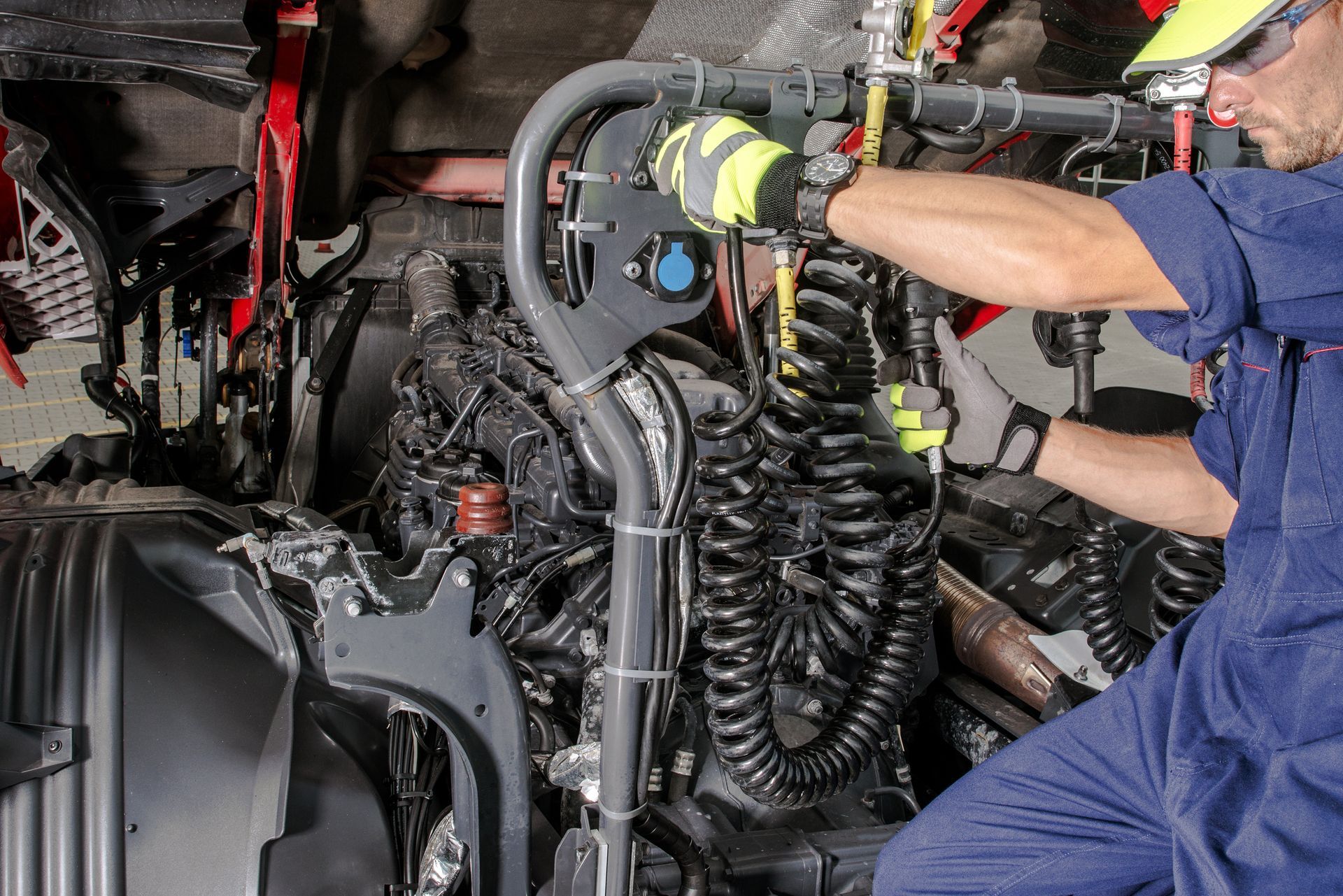
The diagnostic process for a commercial semi or tractor trailer involves electronic systems, mechanical assemblies, and powertrain configurations that differ substantially from passenger vehicle repair—scanning a fault code is a starting point, not a conclusion, and interpreting what that code means against the actual operating behavior of a heavy commercial engine or transmission requires familiarity with commercial-grade systems specifically. Mechanix Unlimited Inc performs complete heavy duty repair and diagnostics in Great Falls for semis, tractor trailers, and commercial vehicles rated at one ton or above, handling the full scope of work from fault identification through the completed repair.
The repair process begins with diagnostics: retrieving active and stored fault codes, reviewing freeze frame data that captures what the system was doing when a fault triggered, and correlating that electronic record against what the driver reports experiencing. On commercial vehicles, the same fault code can have multiple root causes—an exhaust temperature code, for example, may indicate a sensor failure, a dosing system issue, or an actual aftertreatment problem, and distinguishing between them requires live data monitoring under operating conditions rather than a static code read. After the root cause is isolated, the repair scope is defined before parts are ordered, reducing the likelihood that parts are replaced without addressing the actual failure.
Arrange a diagnostic appointment with Mechanix Unlimited Inc to identify what is causing a fault, performance drop, or system warning on your heavy commercial vehicle before determining the repair scope.
How Heavy Duty Repair Addresses Commercial Vehicle Failures
Commercial vehicles operating in freight and agricultural transport accumulate hours and load cycles that stress engine, drivetrain, brake, and emissions components in patterns different from passenger vehicle wear. Aftertreatment systems—DEF dosing, DPF regen cycles, SCR catalyst function—on modern diesel commercial trucks generate fault conditions that are among the most common reasons a semi arrives at a shop with a warning light and reduced power. These systems require both electronic diagnostic capability and mechanical access to verify that the fault is electronic versus a genuine component failure. Mechanix Unlimited Inc approaches each diagnostic sequence by confirming the fault cause before recommending parts or labor, which avoids unnecessary component replacement on systems that can be cleared and monitored versus systems that genuinely require replacement.
After a repair is completed, what the operator notices is that active fault codes are cleared, warning lights are off, and the engine or system that was derated or limited returns to normal operating parameters. For operators running loads through Great Falls and across north-central Montana's commercial corridors, having a complete repair provider locally available means the vehicle does not need to be transported long distances to a dealership or regional service center for diagnostic work that can be handled at the shop level.
Complete heavy duty repair covers the full vehicle rather than a single system—brakes, electrical, engine, transmission, suspension, and emissions components are all within scope. This matters because commercial vehicle fault conditions frequently involve more than one system: a transmission that is throwing codes may be responding to an engine parameter that is out of specification, and addressing only the transmission without investigating the upstream condition means the fault returns..
What Commercial Operators Ask About Heavy Duty Repair
When a heavy commercial vehicle develops a fault or experiences a performance change, operators typically want to understand what the diagnostic process involves and how repair decisions are made before work begins.
- What is the difference between reading a fault code and completing a proper diagnostic on a commercial vehicle? Reading a fault code identifies which system flagged an error; a complete diagnostic determines what physical condition caused that flag. On heavy commercial engines, a single code can correspond to several different root causes, and the diagnostic process uses live data monitoring and component testing to isolate the actual failure rather than replacing parts based on the code description alone.
- How does freeze frame data help diagnose an intermittent fault on a semi or tractor trailer? Freeze frame captures the operating parameters—engine load, temperature, speed, sensor readings—at the exact moment the fault triggered. Reviewing that snapshot allows the technician to identify whether the fault occurred under specific operating conditions, which narrows the possible causes and avoids diagnostic guesswork on systems that only fault under load or at operating temperature.
- Why do aftertreatment faults on modern diesel commercial trucks require more diagnostic steps than mechanical faults? Aftertreatment systems on EPA-compliant diesel engines involve DEF quality sensors, dosing injectors, NOx sensors, differential pressure sensors, and temperature sensors that each feed data to the engine control module. A fault in any one of those inputs can generate a code that appears to implicate a different component, so verifying the actual failure point requires checking each input individually rather than replacing the component the code nominally points to.
- What should a driver report to the technician when a fault first appears on a heavy commercial vehicle? The most useful information includes when the warning light appeared relative to load, speed, and recent operation, whether the engine went into derate mode, any physical symptoms such as smoke, odor, or vibration, and whether the vehicle had recently had any related service. This context helps correlate the fault code against operating conditions.
- How does repair sequencing work when a commercial vehicle has multiple active fault codes at the same time? When multiple codes are present, the technician identifies which codes are primary—caused by an underlying failure—versus secondary codes triggered as a downstream response to the primary fault. Addressing codes in the wrong sequence can result in clearing codes that return immediately because the root cause was not addressed first.
Mechanix Unlimited Inc provides complete heavy duty repair and diagnostics for commercial vehicle operators in Great Falls. To schedule a diagnostic evaluation for a semi, tractor trailer, or heavy duty commercial unit, contact the shop with your vehicle information and a description of the fault or performance change you are observing.